21.07.2026 Our people
VUJE Applies Its Know-How to the Decommissioning of Nuclear Facilities in Ispra, Italy
Decommissioning of nuclear facilities is not merely a technical discipline. It is a long-term process that brings together thorough planning, radiation protection, radiological characterisation, decontamination, materials management, communication with regulatory authorities, and responsibility towards future generations. It is precisely in this field that VUJE, a. s., is now sharing its experience beyond Slovakia’s borders, at the European Commission’s Joint Research Centre Ispra site in Italy.
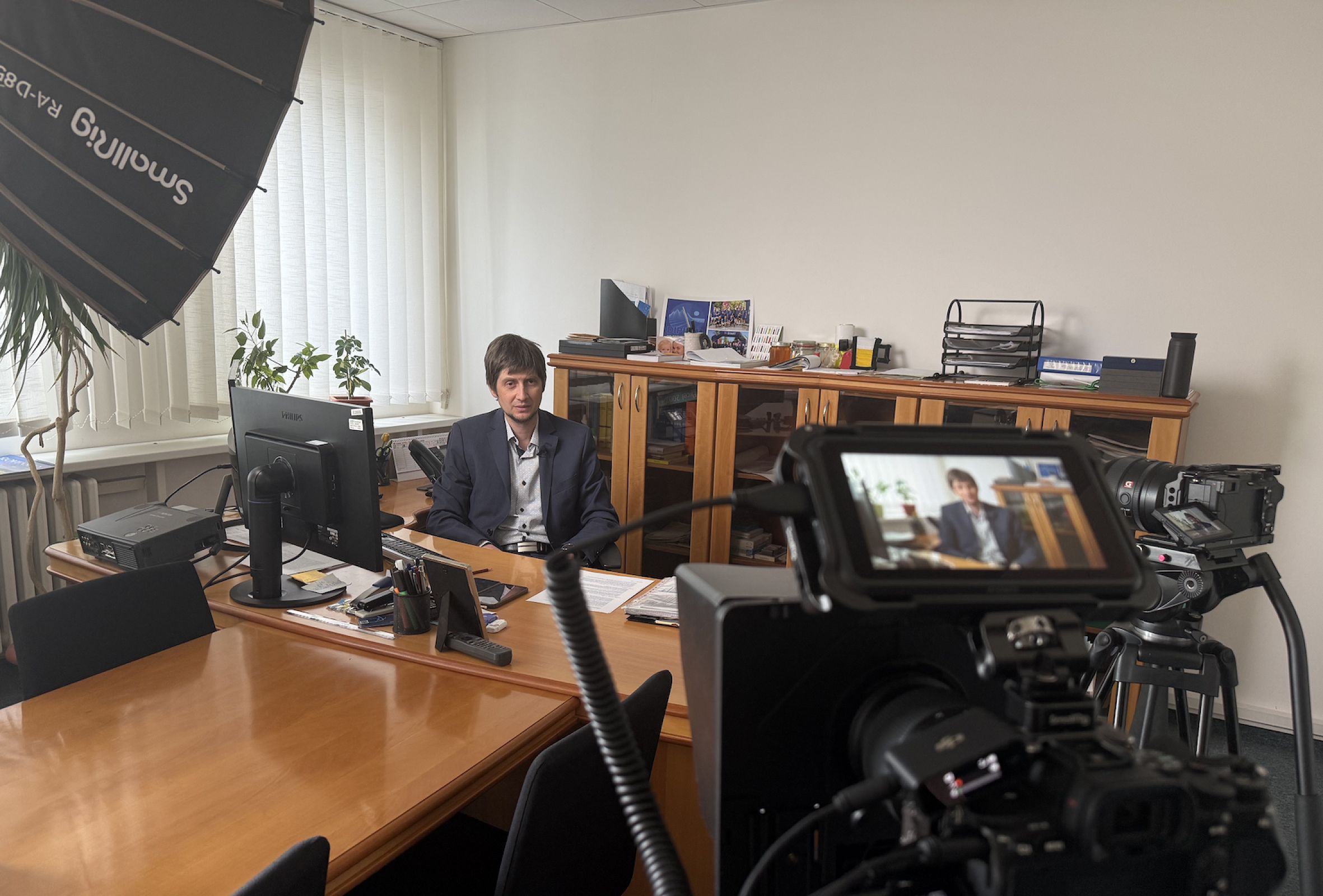
Europe has dozens of shut-down nuclear facilities. Their safe decommissioning requires experts with long-standing, hands-on experience.
A Project That Was Long in the Making and Will Run Even Longer
In September 2023, VUJE entered into an eight-year framework contract for the decommissioning of shut-down nuclear facilities at the European Commission’s Joint Research Centre (JRC) site in Ispra, northern Italy.
The contract is being implemented by a consortium with the Italian company DESPE as the lead partner, while VUJE contributes primarily through its technical expertise and experience from domestic decommissioning projects. This contract represents eight years of systematic, expert and highly complex work carried out in close cooperation with the customer and with our partner DESPE.
“We are working to transfer our long-standing experience and know-how in decommissioning also to projects abroad,” says Matej Zachar, Director of Radiation Safety, Nuclear Power Plants Decommissioning and RAW Management Division at VUJE, a. s.
Experience from Slovakia
The division led by Matej Zachar is one of VUJE’s key specialist units in the field of nuclear facility decommissioning, radiation safety and radioactive waste management. In Slovakia, it is involved in two major nuclear power plant decommissioning projects: A1 and V1.
At the V1 nuclear power plant, the division is currently implementing the necessary modifications to technological systems and building structures, radiological characterisation, dismantling, decontamination of building surfaces, and final radiological monitoring so that the buildings of the main unit can be prepared for demolition. In the case of the A1 nuclear power plant, VUJE experts are also preparing for the decommissioning of the last, technically and radiologically most complex components of the primary circuit, including four steam generators and the reactor itself.
“Decommissioning of nuclear facilities is a field in which experience, professional continuity and the ability to address highly diverse technical situations are decisive. Every site has its specific characteristics, but the principles of safety, characterisation, dismantling, decontamination and materials management must remain the same,” explains Matej Zachar.
What Is Being Decommissioned in Ispra?
The JRC Ispra site is not a conventional workplace. It is a European Commission research centre where, after decades of scientific and research activity, nuclear facilities remain that require responsible and safe decommissioning:
- the 25 MW ESSOR research reactor, using heavy water as both moderator and coolant;
- the Hot Cells Laboratory (LCSR);
- the Liquid Radioactive Waste Treatment Station (STRRL);
- a particle accelerator facility (cyclotron).
Each of these facilities represents a specific technical challenge, including in terms of radiation safety, the required equipment, and documentation in line with the requirements of the customer and the regulatory authorities.
How Does the Project Work in Practice?
The framework nature of the contract means that the work is carried out through individual specific contracts, each precisely defining the scope of a partial task.
Since the start of the project, approximately 60 specific contracts have already been concluded, with 15 to 25 active in parallel at any given time. Their duration varies significantly — from contracts lasting only a few weeks to complex multi-year projects.
The scope of services provided is exceptionally broad:
- radiological characterisation, including monitoring of environmental components;
- dismantling, decontamination and materials management;
- manufacture and delivery of specific and complex equipment to support decommissioning activities;
- advisory services, consultations and technical expertise;
- preparation of relevant documentation;
- delivery of equipment, mechanisms or materials required for the implementation of decommissioning activities.
A Slovak Team on Italian Soil
At present, four VUJE employees are involved in the project on a long-term basis and are present at the Ispra site throughout the year.
The core of our team consists specifically of:
- the Director of our Italian branch — a highly qualified decommissioning engineer with more than 10 years of direct experience at the Ispra site;
- three young engineers with experience in decommissioning, working mainly as leaders of specific contracts, as well as in the areas of characterisation and preparation of the necessary documentation;
- experts from various areas of decommissioning, particularly in the preparation of safety documentation, as well as designers of complex equipment, working predominantly from Slovakia.
In total, up to 50 people are present at the ISPRA site on a daily basis, including DESPE personnel and operators, VUJE engineers and other external support.
“We are approximately in the first third of the contract, and the project is gradually expanding. New specific contracts are being added, while at the same time it is becoming clear how important it is to have people on site who understand both the technical substance of the work and the operational rules of the ISPRA site,” adds Matej Zachar, Director of the specialised division.
A Success That Speaks for Itself
One of the most significant activities in which VUJE has participated within the Ispra project was the delivery of a new water purification system for the spent fuel storage pool.
“The system was fully manufactured, delivered, tested and, after completion of the tests, handed over to the customer. It is a technology designed for the chemical purification of water and the reduction of radioactivity in the pool water, where parts containing fuel are still stored,” explains Matej Zachar.
In addition, our employees directly on site, acting as leaders of specific contracts, ensure the decommissioning of equipment from the former hot cells and the liquid radioactive waste treatment facility.
Among the activities carried out predominantly by engineers from Slovakia, particular mention should be made of a project focused on the design of equipment for the retrieval, fragmentation and packaging of structural elements containing nuclear materials irradiated in the reactor, including safety analyses covering the process.
Decommissioning as Part of Responsible Nuclear Energy
In public debate, nuclear energy is often associated primarily with electricity generation, energy security and stability of supply. An inseparable part of it, however, is the responsible management of nuclear facilities at the end of their life cycle, including the preparation of sites or buildings for further use outside the nuclear industry.
Europe has dozens of shut-down nuclear facilities whose dismantling requires experts with practical experience, not only theoretical knowledge.
Decommissioning nuclear facilities is a process that lasts years or even decades and requires a high level of expertise, precise documentation and strict compliance with safety rules.
“If nuclear energy is to remain credible in the long term, not only its operation but also its final phase must be mastered. Decommissioning nuclear facilities is both a professional and a societal responsibility. It demonstrates that the nuclear industry must be able to safely address the entire life cycle of its technologies,” emphasises Matej Zachar.
The project “Decommissioning services and related supplies for the JRC Decommissioning & Waste Management Programme”, implemented at the Ispra site, is therefore more than an exceptionally interesting international contract. It confirms that Slovak know-how and specialist capacities in nuclear facility decommissioning are also applicable in an international environment and can form part of broader European efforts to deliver transparent and responsible solutions in the nuclear sector, contributing to a safe future for the entire continent.
The project is being implemented for the European Commission, which acts as the customer. Publication of the text is subject to JRC approval.