18.06.2026 News
VUJE at NE•RS 2026: Nuclear Energy Needs Equal Standing Among Low-Emission Sources
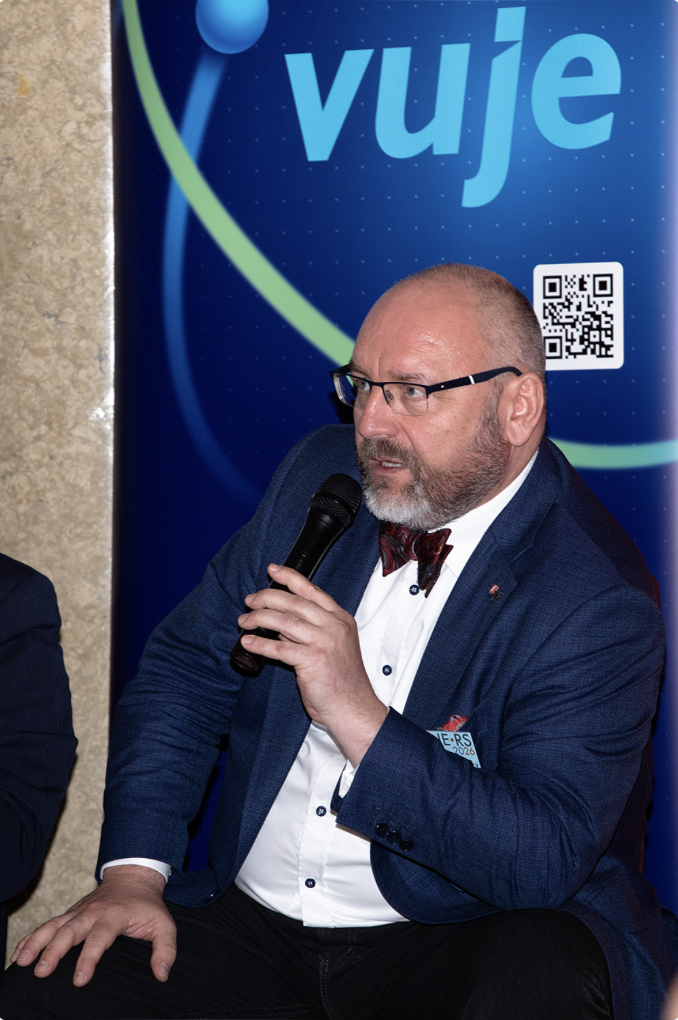
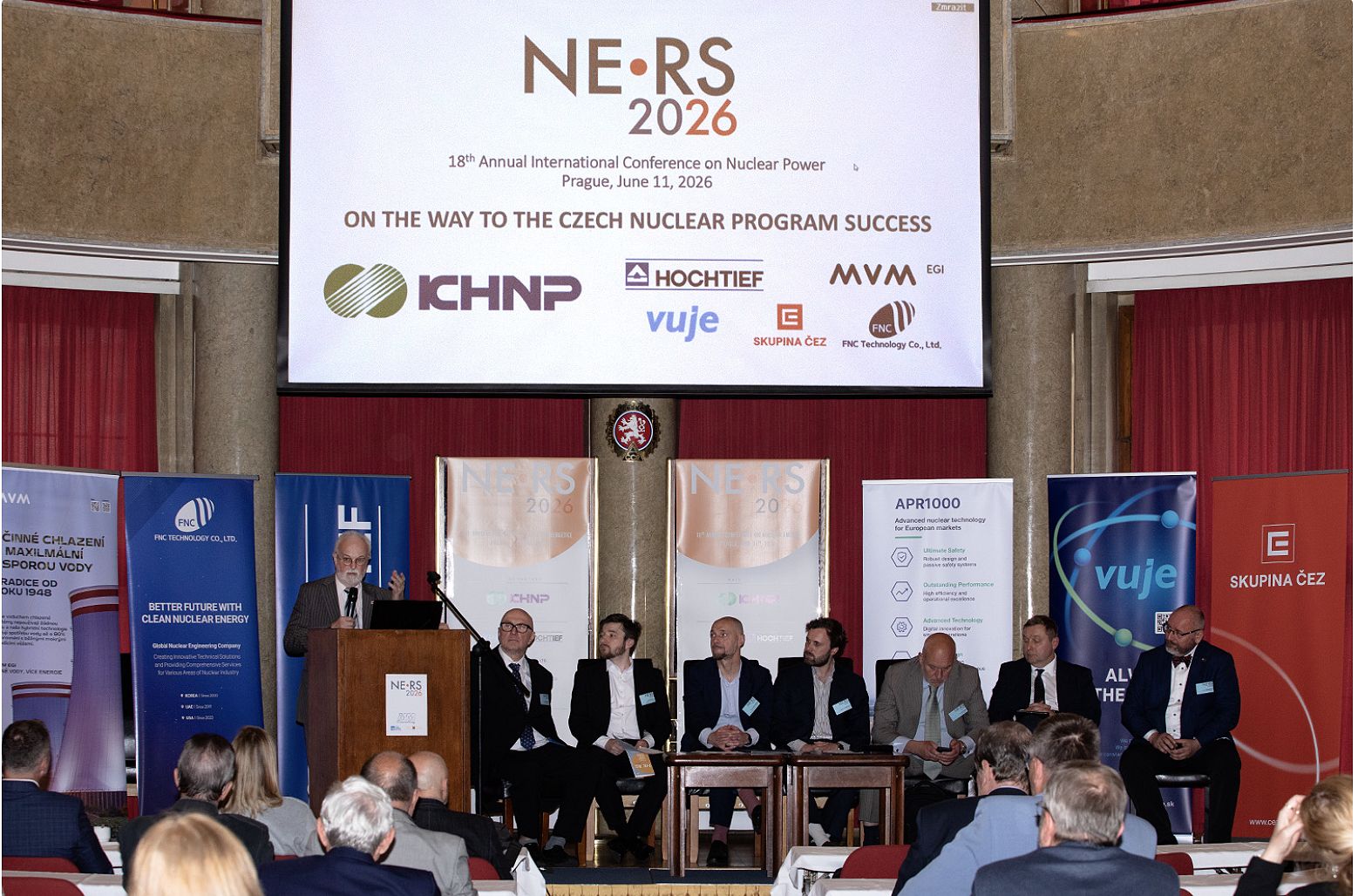
As a strategically important source of electricity generation, nuclear energy is stable, resilient, cost-effective and has significant potential in the decarbonisation of the energy sector. The conditions that need to be created for the successful development of nuclear programmes in Europe were discussed by experts at the NE•RS 2026 conference. Andrej Žiarovský, Director for Development and International Operations at our company, was part of the key expert panel.
In Europe, nuclear energy is no longer a topic viewed solely through the lens of a single country, one project or one investment decision. It is increasingly becoming part of the strategic discussion on energy security, the stability of electricity supply, industrial decarbonisation and Europe’s competitiveness.
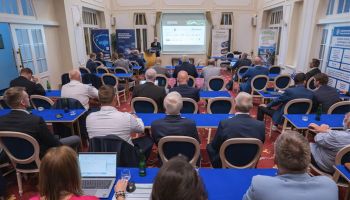
These were precisely the topics at the centre of the expert panel discussion held during the 18th annual nuclear energy conference in Prague. One of the key messages was the call for nuclear energy to be placed on an equal footing with other low-emission sources.
Nuclear Energy as Part of the Energy Strategy for 2050
The discussion focused on what needs to be done to meet future energy needs, particularly with a view to 2050. It addressed the position of nuclear energy in the energy mix, its role in low-emission electricity generation, as well as the obstacles that may accompany the more extensive development of nuclear projects in Europe.
Analyses of the development of nuclear energy estimate that the required installed capacity of nuclear power plants could reach approximately 600 GW by 2050. Current global capacity stands at around 440 GW, while a significant share of existing sources will be shut down by 2050. This means that approximately 400 GW of new capacity will need to be built, including small modular reactors. Although a significant share of this capacity will be developed outside Europe, this represents a major challenge for European industry, regulation, financing and the education system.
Recognising Nuclear Energy Also Means Ensuring Fair Financing
Under the current taxonomy of the European Union, nuclear energy is classified as a recognised emission-free source. Unlike renewable energy sources, however, nuclear projects still do not have comparable financial or other support. Large nuclear projects are also met with caution by financial institutions, and their success is largely linked to a stable role of the state, long-term rules and a change in approach at the level of European institutions.
Andrej Žiarovský, Director for Development and International Operations at VUJE, a.s., and newcleo Country Lead for Slovakia, therefore raised important requirements in the panel.
“If Europe is to meet its decarbonisation targets while maintaining stable, secure and competitive electricity supplies, nuclear energy must be part of the solution under fair and predictable conditions. It must have the same standing as other low-emission sources. It is not enough to recognise nuclear energy in principle. We need stable rules, fair access to financing, support for expert capacities and international cooperation across the entire life cycle of nuclear projects,” he emphasised.
The Success of Nuclear Energy Depends on Expert Capacity
The development of nuclear energy is not only a matter of building new sources. It requires a prepared industry, a high-quality regulatory environment, long-term financing, a strong safety culture and sufficient expertise at all levels.
Further development of nuclear energy requires broad international cooperation in all phases of preparation and construction of new nuclear power plants. Legislation and regulation in the areas of safety, quality assurance and material requirements are equally important, as is the education and training of technicians and top-level experts.
In the long term, nuclear power plants represent a pillar of baseload electricity generation. They provide stability and security of supply 24 hours a day, seven days a week, rank among the sources with the lowest carbon footprint and, at the same time, represent a highly sophisticated technology.
A European-Level Expert Discussion
The NE•RS 2026 conference brought together strong expert voices from the fields of nuclear safety, European energy policy, industry and international nuclear organisations. Andrej Žiarovský was joined in the panel discussion by Karel Havlíček, First Deputy Prime Minister and Minister of Industry and Trade of the Czech Republic; Štěpán Kochánek, Chairman of the State Office for Nuclear Safety; Guilherme Cardoso, Nuclear Technology Advisor at nucleareurope, Brussels; Josef Kotrba, Executive Director of the Energy Association of the Czech Republic; and Kamil Tuček, Deputy Head of Unit, Directorate-General for Energy, European Commission, Brussels.
For VUJE, this topic is a natural part of its long-term professional direction. The future of nuclear energy will depend not only on political decisions, but also on the ability to connect technical know-how, operational experience, qualified experts and international cooperation.